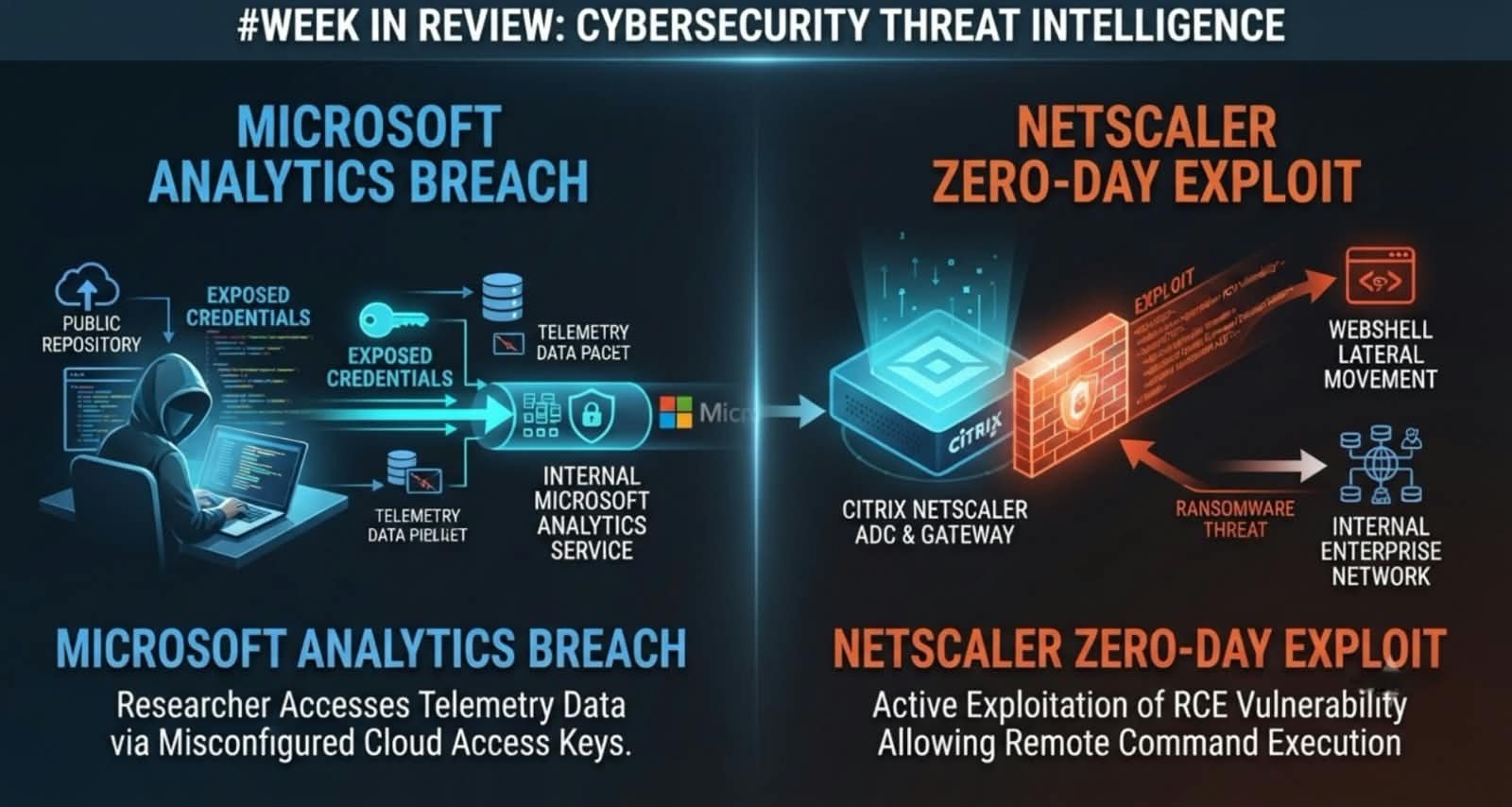
Such events highlight the persistent difficulties in protecting telemetry data stored in the cloud and enterprise infrastructure at the perimeter from being exploited locally.
Researcher Breaks Into Microsoft Analytics and Telemetry Systems
Cloud infrastructure is vulnerable, as demonstrated by a security researcher who has accessed one of Microsoft's internal analytics services. The breach underscores the continued dangers of misconfigured cloud assets, leaked credentials, and the convoluted web of interconnected telemetry services that big technology vendors depend on to monitor software performance.How the Analytics Service Was Compromised
The intrusion began not with sophisticated zero-day exploits but with a mix of exposed access keys and poor network segmentation. A security researcher found a set of exposed credentials in a public repository that directly linked to a database used by Microsoft’s internal analytics infrastructure.Armed with these credentials, the researcher bypassed traditional security perimeters to get into sensitive telemetry pipelines. The pipelines contained structural data, system diagnostics, and potentially identifiable metadata from Microsoft internal operations and a subset of enterprise customer deployments.
What This Means for Enterprise Cloud Security
Microsoft rapidly revoked the compromised credentials and secured the impacted endpoint, but this incident underscores a critical vulnerability in the modern software supply chain: telemetry and analytics pipelines.Secret Management Failures: The core reason for the breach—exposed keys in public-facing code repositories—is still one of the most common methods for compromising cloud-based systems.
Concerns of Tenant Isolation: The fact a researcher could use telemetry access to potentially look into cross-tenant system data demonstrates the need for a stricter logical separation for cloud-scale data lakes.
The Telemetry Attack Surface: Telemetry data sent back to SaaS and PaaS vendors is often not considered from a security perspective by companies. If a vendor’s ingestion point is compromised, the telemetry pipeline can be weaponized for intelligence collection or lateral movement.
Microsoft says it has no evidence that this vulnerability has been maliciously exploited before the researcher discovered it. However, the incident is a painful reminder for organizations to ensure that they have robust automated scanning for secrets and strict role-based access control (RBAC) across all cloud-based monitoring services.
Critical NetScaler RCE Zero-Day Actively Exploited
Meanwhile, enterprise defenders are scrambling to patch a critical zero-day flaw impacting Citrix NetScaler (formerly Citrix ADC) and NetScaler Gateway. Cybersecurity agencies and threat intelligence firms have confirmed that APT groups and ransomware affiliates are actively exploiting this vulnerability to perform unauthorized remote code execution on targeted systems.Technical Analysis of the NetScaler Security Flaw
This vulnerability allows an unauthenticated, remote attacker to execute arbitrary commands on affected NetScaler appliances. Because NetScaler gateways sit at the very edge of the enterprise perimeter, successful exploitation gives threat actors immediate access into target networks, bypassing external firewalls and multi-factor authentication (MFA) controls.Type: Unauthenticated Remote Code Execution (RCE).
Attack Vector: Remote exploitation, network-based, no user interaction needed.
Mitigation Status: Citrix has issued emergency security updates and instructed all administrators to implement the patches immediately.
Following exploitation, security researchers have seen threat actors deploying custom webshells. These webshells are used to maintain persistence, harvest active user credentials, and move laterally into the internal corporate directory, often resulting in domain-wide ransomware deployment.
Target Industry and Threat Actor Profiles
Telemetry suggests that the exploitation of this zero-day is highly targeted but spreading rapidly. The main industries now under attack are:
Local Governments and Agencies
Healthcare Providers and Critical Infrastructure
Financial Institutions and Large Enterprise Networks
This zero-day is believed to have initially been used by state-sponsored cyber-espionage groups to conduct quiet reconnaissance and establish long-term access. But since then, the exploit code has made its way into the playbooks of financially motivated cybercrime groups, resulting in a significant increase in the amount of opportunistic scanning and automated attacks.
Defensive and Mitigation Actions
IT security teams must act now and in an organized fashion to the dual threat of compromised vendor analytics and active exploitation of edge devices.What Citrix NetScaler Admins Need to Do Now
1. Apply Emergency Patches: Apply the latest firmware patches issued by Citrix as quickly as possible. Don’t wait; hackers are out there scanning for unpatched devices.2. Conduct Forensic Analysis: Check system logs, network traffic, and device configurations for evidence of compromise before patching. Specifically look for unauthorized configuration changes, unexpected outbound connections from the NetScaler IP, and anomalous local accounts created.
3. Credential Revocation: Initiate a global password reset for all AD accounts, terminate all active user sessions, and rotate all certificates and API keys stored on the NetScaler appliance in case of suspected compromise.
Security for Cloud Analytics and Secret Management
To avoid incidents like the Microsoft analytics breach, organization leaders need to implement tight cloud hygiene standards:Automated Secrets Detection: Use real-time scanning tools (e.g., GitGuardian, GitHub Secret Scanning) to detect hardcoded API keys, passwords, and tokens before they are committed to public or private repositories.
Principle of Least Privilege (PoLP): Ensure telemetry and analytics systems run with least privilege. Analytics databases should never have direct write access to production environments.
Zero Trust Network Architecture: Isolate internal telemetry networks from public-facing services to prevent lateral movement to critical infrastructure even if an ingestion server is compromised, mathematically and logically.
Conclusion: The Dual-Front War for Enterprise Defenses
The cybersecurity news this week shows the dual challenge facing modern enterprises. Organizations need to protect their immediate perimeters from highly destructive exploits against infrastructure devices like Citrix NetScaler, on one hand. But they also need to keep a close watch on the invisible, complex data pipelines that connect their networks to big cloud providers like Microsoft.Threat actors continue to show speed, precision, and adaptability, making proactive vulnerability management, strict credential hygiene, and ongoing surveillance the pillars of a resilient enterprise defense.