
Speaking at the first DBS Asia Future Forward Conference in Singapore, DBS CEO Tan Su Shan and TikTok CEO Chew Shou Zi stressed the need for businesses and individuals to keep an eye on artificial intelligence for purposeful goals instead of using it as a mere trend.
Tan Su Shan (DBS Bank): Focus on Intentional Outcomes, Not Just Application.
“Asia has rapidly stepped up to demonstrate practical AI use cases from workflow redesigns and personalized finance to eldercare assistance, but too many enterprises are still stuck in passive deployment,” said Tan Su Shan.
More Than a Novelty Factor: Stacking AI models on top of existing operations isn’t creating lasting value. Before rolling out, enterprises need to identify the specific business problem, quantifiable metric, or human challenge the model is meant to address.
Human-Centric Redesign: Technology should enhance human dignity and service delivery, not displace workers indiscriminately. “The real test for AI adoption is whether we see positive and balanced outcomes for businesses and the communities they serve,” said Tan.
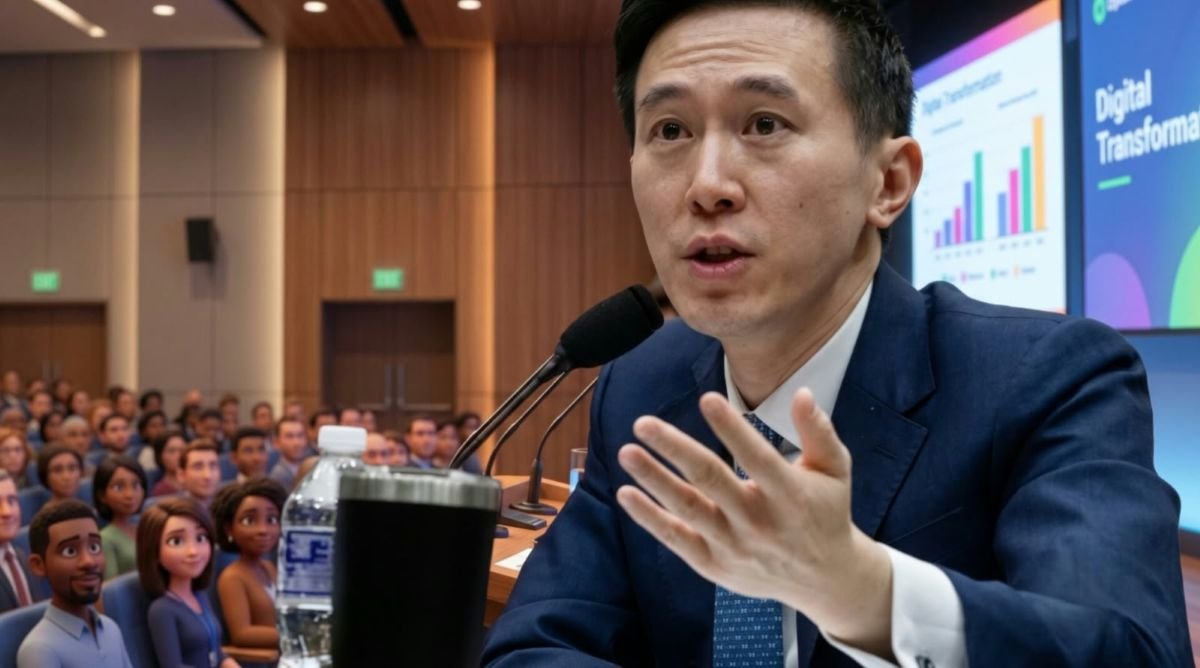
Silicon vs. Carbon and the Vital Role of Human Judgment Chew Shou Zi (TikTok)
Chew Shou Zi said that while raw computing speed is scaling very fast with silicon only a little better than carbon in raw processing speed and computational capacity, things like critical thinking and human judgment are not outsourceable.Chew pointed to the danger of agentic AI, where autonomous systems are given the power to act on behalf of a user. He warned that people and organizations often give algorithmic agents wide access, sometimes without understanding the cascading effects, reinforcing why LLM agents need deterministic guardrails rather than unchecked autonomy.
Cybersecurity and Risk Visibility: With the growing autonomy of artificial intelligence (AI), cybersecurity threats are evolving at a rapid pace. As illustrated by recent platform breaches and exploited cloud vulnerabilities, companies need proactive protections, strict access governance, and ongoing security audits, not models to police themselves.
The Unreplaceable Spark of Human Connection
In areas like creative content and engagement, Chew said that, despite massive AI experimentation, human audience receptivity to purely synthetic generation is limited. True intuition, creative nuance, and emotional resonance are still human qualities, and the human element still drives engagement.Strategic Implications for Business Leaders
To avoid the hype in this landscape, the conference conversations came together on four actionable imperatives:1. Make sure humans are a solid part of the loop: We need human validation points for critical strategic decisions, high-risk financial risk calculations, and moral decisions.
2. Audit Permissions and Autonomy: Treat autonomous AI agents as you would external third-party contractors, with strict governance, spending caps, system boundary limits, and zero-trust controls.
3. Upskill for Critical Evaluation: Workforce training needs to move beyond prompt generation to training employees to interrogate, audit, and debug algorithmic recommendations. Knowing how different models perform—such as evaluating ChatGPT vs. Claude vs. Gemini for copywriting and reasoning—helps teams select the right tool while maintaining human verification over the final output.
4. Ask for purpose-built deployments: Target AI projects that clearly improve the customer experience, speed up bottleneck processes, or reduce specific business risks.
Artificial intelligence is best leveraged as a cognitive force multiplier, not as a proxy for corporate accountability. In today’s market, the winners of competitive advantage will not be those who buy the most compute, but those organizations that have the greatest intentionality, governance, and human judgment behind the machines they command.